

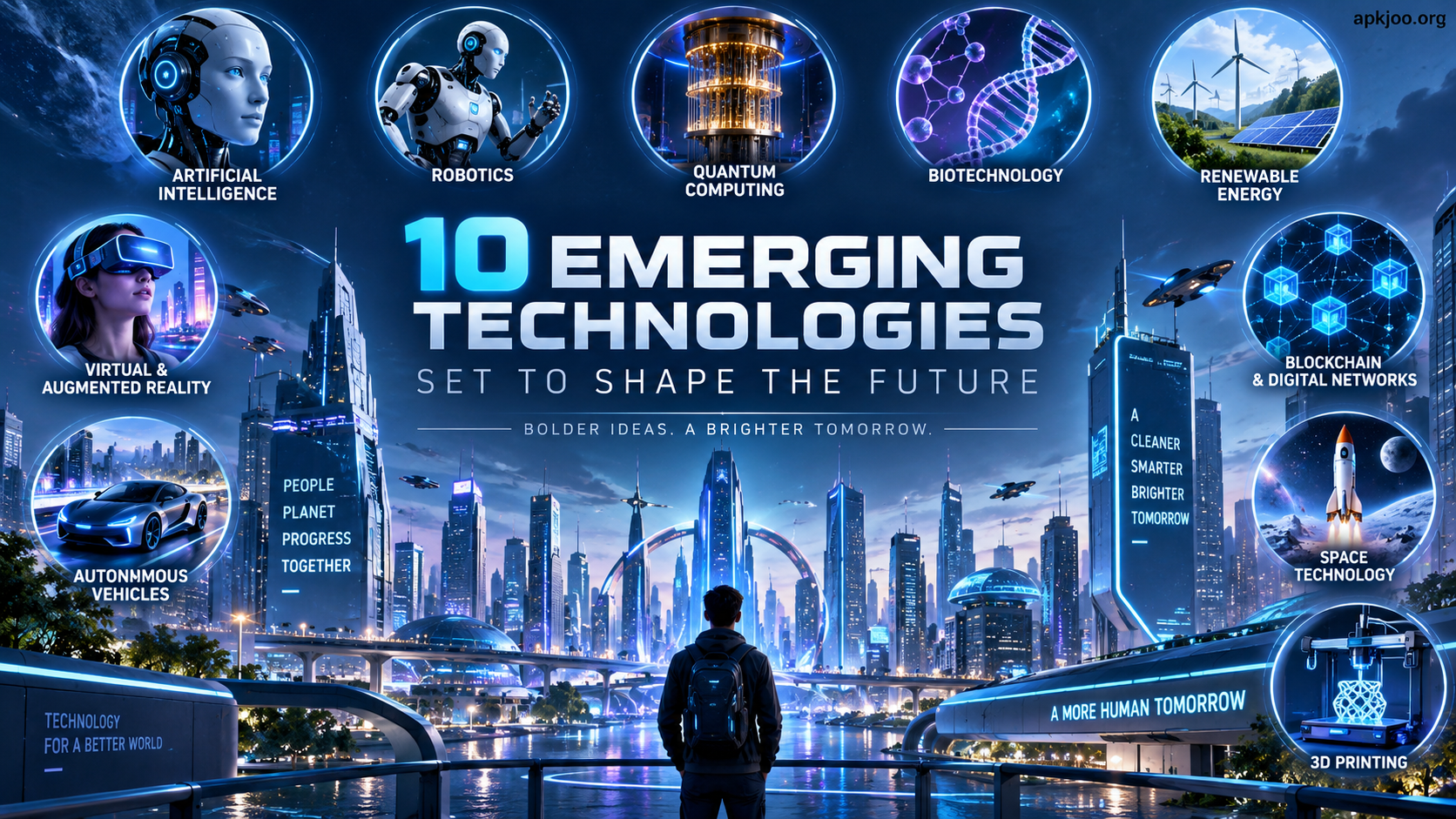
Technology continues to evolve at remarkable speed, changing how people work, communicate, travel, learn, and solve everyday problems. New innovations are moving from research labs into real-world applications, creating opportunities across industries and communities.
From advanced artificial intelligence to quantum computing and clean energy, emerging technologies are building a more connected and efficient future. Understanding these developments can help businesses, professionals, and everyday users prepare for major changes in the years ahead.
Read More: AI Business Trends Transforming Modern Companies
Artificial Intelligence and Generative AI
Artificial intelligence remains one of the most influential technologies shaping modern innovation. AI systems can analyze large amounts of data, recognize patterns, automate tasks, and support decision-making across different industries.
Generative AI is expanding these capabilities by producing text, images, software code, audio, and other digital content. Businesses are using AI-powered tools for customer service, marketing, research, content creation, and workplace automation.
Quantum Computing
Quantum computing represents a new approach to processing complex information. Unlike traditional computers, quantum systems use quantum principles to handle certain calculations in fundamentally different ways.
Although large-scale quantum computing remains under development, its potential is significant. Future applications could include drug discovery, advanced materials, financial modeling, cybersecurity, and complex scientific research.
Robotics and Autonomous Machines
Robotics is becoming more capable through improvements in artificial intelligence, sensors, computer vision, and machine learning. Modern robots can perform increasingly complex tasks with greater precision and flexibility.
Autonomous machines could transform manufacturing, logistics, healthcare, agriculture, and transportation. Potential applications include warehouse robots, delivery systems, surgical assistance, agricultural machines, and autonomous vehicles.
Biotechnology and Genetic Engineering
Biotechnology is combining biology with advanced computing, engineering, and data analysis to create new solutions for healthcare and agriculture. Researchers are developing innovative approaches to disease treatment, diagnostics, food production, and biological research.
Genetic engineering is also advancing rapidly. Technologies such as gene editing may support new medical treatments and improve understanding of genetic conditions, while agricultural biotechnology could contribute to more resilient crops.
Extended Reality
Extended reality includes virtual reality, augmented reality, and mixed reality. These technologies are creating digital experiences that can interact with physical environments or place users inside immersive virtual spaces.
Future applications may extend beyond entertainment. Education, workplace training, healthcare, tourism, product design, and remote collaboration could all benefit from more realistic digital environments.
6G and Next-Generation Connectivity
The development of next-generation wireless networks is expected to provide faster communication, lower latency, and support for enormous numbers of connected devices. Research into 6G is already exploring technologies that could go beyond the capabilities of current networks.
Better connectivity could support smart cities, autonomous systems, immersive experiences, industrial automation, and advanced Internet of Things applications. Reliable communication will remain an important foundation for future digital services.
Internet of Things
The Internet of Things connects physical devices to networks so they can collect, exchange, and process information. Smart appliances, wearable devices, industrial sensors, vehicles, and connected infrastructure are already part of this expanding ecosystem.
Future IoT systems could become more intelligent through AI and edge computing. Businesses may use connected sensors to monitor equipment, reduce downtime, improve energy efficiency, and optimize operations.
Clean Energy Technologies
The transition toward cleaner energy is driving innovation in solar power, wind energy, energy storage, smart grids, and alternative fuels. Improvements in battery technology are especially important for electric vehicles and renewable energy systems.
Emerging energy technologies could make electricity systems more flexible and efficient. Advanced storage solutions can help balance energy supply and demand, while smart grids can improve how electricity is distributed and managed.
Advanced Semiconductors
Semiconductors power almost every modern digital system, from smartphones and computers to vehicles and industrial machines. Growing demand for AI, connected devices, and high-performance computing is increasing the need for more advanced chips.
Future semiconductor development will focus on greater performance, energy efficiency, specialized processors, and new manufacturing techniques. These advances could support faster AI systems, intelligent vehicles, robotics, and next-generation consumer electronics.
Brain-Computer Interfaces
Brain-computer interfaces are emerging technologies designed to create communication pathways between the brain and digital systems. Researchers are exploring ways these interfaces could help people interact with computers using neural signals.
Medical applications are an important area of research. Future systems could potentially assist people with certain disabilities, support communication, or improve interaction with assistive technologies. Development will require careful attention to safety, privacy, and ethical considerations.
The Future of Emerging Technology
These emerging technologies are developing at different speeds, but their combined impact could be substantial. AI can improve robotics, advanced connectivity can strengthen IoT systems, and better semiconductors can power increasingly sophisticated digital applications.
Several important trends are likely to influence technological development:
- Greater automation across industries
- More intelligent and connected devices
- Increased focus on energy efficiency and sustainability
Businesses and individuals will need to adapt as these technologies mature. Learning new digital skills, understanding technological changes, and following responsible innovation practices can help people navigate an increasingly technology-driven world.
Frequently Asked Question
What are emerging technologies?
Emerging technologies are new or rapidly developing innovations with the potential to transform industries, businesses, and everyday life.
Which technology will have the biggest future impact?
Artificial intelligence is expected to have a major impact because it can improve automation, decision-making, content creation, research, and many other digital processes.
Why is quantum computing important?
Quantum computing could solve certain complex problems much faster than traditional computers, with potential applications in science, medicine, finance, and cybersecurity.
How will robotics change the future?
Advanced robotics can automate repetitive or complex tasks across manufacturing, healthcare, agriculture, logistics, and other industries.
What role will biotechnology play in the future?
Biotechnology could support new medical treatments, advanced diagnostics, improved agricultural systems, and innovative approaches to biological research.
Will 6G change everyday technology?
Next-generation connectivity could provide faster communication, lower latency, and stronger support for connected devices, smart infrastructure, and immersive digital experiences.
Why are clean energy technologies important?
Clean energy technologies can support more sustainable power generation, improve energy storage, reduce dependence on fossil fuels, and contribute to more efficient energy systems.
Conclusion
Emerging technologies are creating new possibilities across healthcare, business, education, transportation, energy, and everyday life. Artificial intelligence, quantum computing, robotics, biotechnology, connectivity, and clean energy are among the innovations receiving significant attention.
The future will not be shaped by one technology alone. Instead, progress will come from the combination of multiple technologies working together. As these innovations continue to mature, they could transform existing industries while creating entirely new opportunities and digital experiences.

1 Comment
Pingback: Artificial Intelligence Trends Taking the Tech World by Storm