

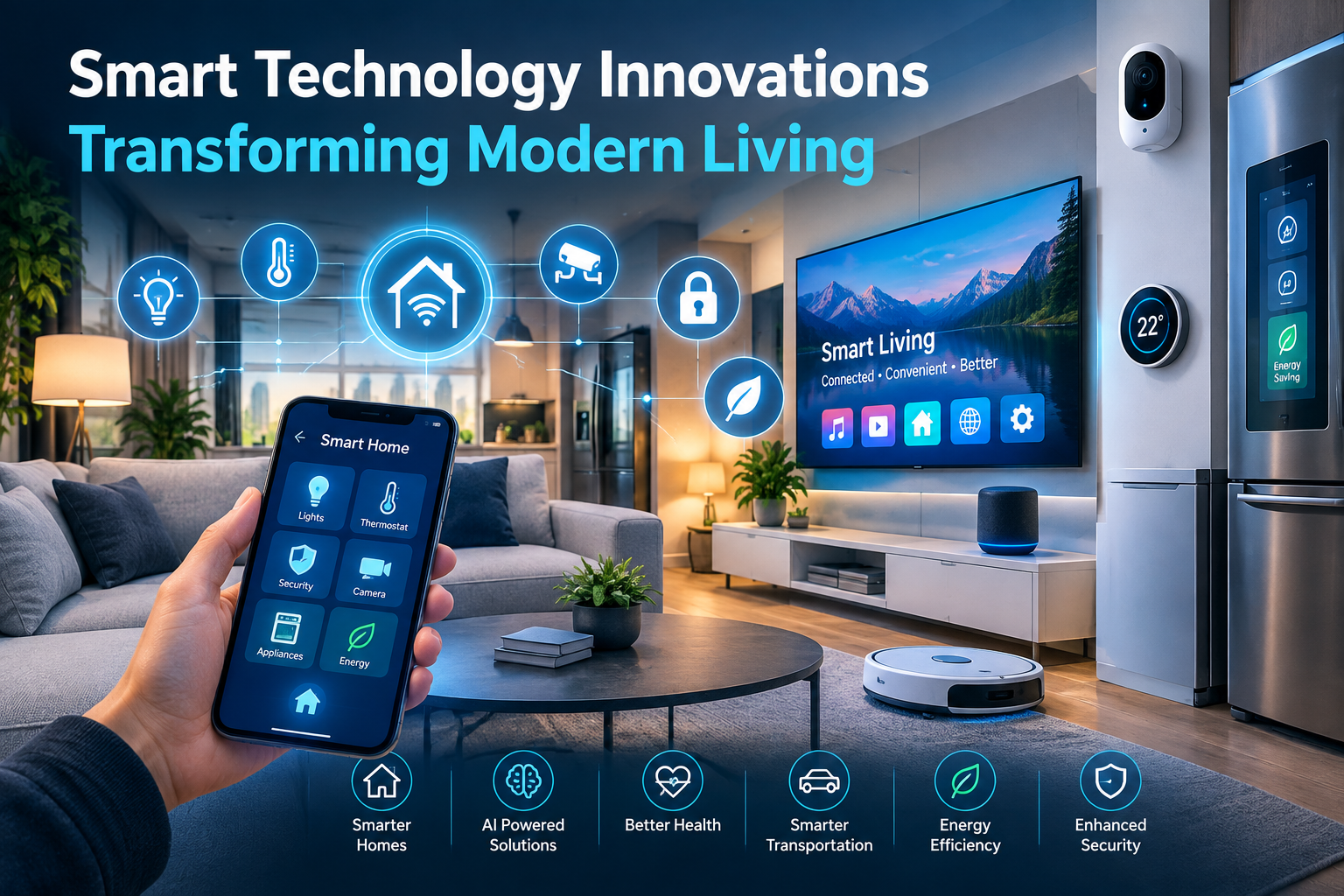
Smart technology is changing modern life at an incredible pace. From intelligent homes and connected devices to AI-powered services, new innovations are making everyday activities faster, easier, and more convenient. People can now control home appliances, manage personal tasks, monitor health, and stay connected through smart digital solutions.
The growth of smart technology is also creating new opportunities for businesses, families, and individuals. Connected systems can improve efficiency, reduce unnecessary effort, and provide personalized experiences. As innovation continues, smart technology is becoming an important part of modern living.
Read More: Future Technology Trends Everyone Should Watch in 2026
Smart Homes Creating More Convenient Lifestyles
Smart home technology has transformed traditional houses into connected living spaces. Smart lights, thermostats, security cameras, doorbells, and appliances can communicate through connected networks. Users can manage many household functions through smartphones or voice assistants, creating greater convenience in daily routines.
Energy management is another major benefit of smart homes. Intelligent thermostats and lighting systems can adjust settings according to usage patterns. These solutions can help households reduce unnecessary energy consumption while maintaining comfortable living environments.
Artificial Intelligence Improving Everyday Technology
Artificial intelligence is playing a major role in modern smart technology. AI systems can understand patterns, process information, and provide personalized responses. Smartphones, virtual assistants, search platforms, and recommendation systems already use AI to improve digital experiences.
AI-powered technology is becoming more capable of handling routine tasks. Smart assistants can organize schedules, answer questions, manage reminders, and interact with connected devices. These features allow users to save time and focus on more important activities.
Wearable Devices Supporting Connected Lifestyles
Wearable technology has become another important part of smart living. Smartwatches and fitness trackers can monitor activity, sleep patterns, exercise performance, and other wellness-related information. Users can access useful insights through compact devices worn throughout the day.
Modern wearables also provide communication and productivity features. Notifications, calls, messages, navigation, and calendar updates can appear directly on a smartwatch. This combination of convenience and connectivity has made wearable technology increasingly popular.
Smart Transportation Making Travel More Efficient
Technology is transforming transportation through connected vehicles, navigation systems, and electric mobility. Modern vehicles can include intelligent safety features, advanced navigation, driver assistance systems, and connected entertainment platforms.
Electric vehicles are also contributing to the evolution of smart transportation. Connected charging systems and intelligent energy management can make electric mobility more convenient. Smart traffic systems can further support smoother transportation by using real-time information to manage road conditions.
Smart Healthcare Enhancing Personal Wellness
Digital technology is creating new possibilities within healthcare and personal wellness. Connected devices can collect useful information and help users understand everyday health patterns. Wearable sensors and smart health devices can support monitoring and encourage healthier routines.
Telehealth platforms have also expanded access to healthcare services. Digital communication allows people to connect with healthcare professionals remotely in many situations. Combined with connected devices, these technologies are creating more personalized and accessible digital healthcare experiences.
Smart Security Protecting Modern Homes
Home security has become more advanced through connected technology. Smart cameras, motion sensors, video doorbells, and intelligent locks can provide homeowners with greater visibility over their properties.
Many security devices can send real-time alerts to smartphones when unusual activity is detected. Remote access allows users to check cameras or manage connected locks from different locations. These features are making home security more connected and responsive.
Smart Appliances Simplifying Household Tasks
Smart appliances are reducing the effort required for everyday household activities. Connected refrigerators, washing machines, ovens, and robotic vacuum cleaners can provide automated functions and remote controls.
Many appliances can also provide notifications about operating conditions or maintenance requirements. Automation can help users manage household responsibilities more efficiently while reducing repetitive tasks.
Internet of Things Connecting Everyday Devices
The Internet of Things, commonly known as IoT, is a key technology behind modern smart living. IoT allows connected devices to exchange information through networks. This creates an ecosystem where different products can work together.
For example, a smart home system can connect lighting, security, heating, entertainment, and appliances. As more devices become connected, users can create personalized environments based on their daily routines and preferences.
Smart Technology Improving Energy Efficiency
Energy efficiency has become an important focus of modern technology. Smart meters, connected thermostats, solar systems, and intelligent energy-management platforms can help users understand and manage consumption.
Smart systems can analyze usage patterns and identify opportunities for reducing waste. Businesses and households can use this information to improve energy management and support more sustainable lifestyles.
Future of Smart Technology
The future of smart technology will likely bring deeper integration between artificial intelligence, connected devices, robotics, and automation. Devices may become better at understanding user preferences and responding to changing environments.
Privacy and cybersecurity will remain important as more personal devices become connected. Strong security practices, responsible data management, and reliable software will be essential for building trust in future smart technologies.
Frequently Asked Questions
What is smart technology?
Smart technology uses connected devices, software, sensors, and artificial intelligence to automate tasks and improve everyday experiences.
How is smart technology changing modern homes?
Smart technology allows homeowners to control lighting, security systems, appliances, thermostats, and entertainment devices through connected platforms.
What are the benefits of smart technology?
Major benefits include convenience, automation, better energy management, improved connectivity, enhanced security, and personalized experiences.
How does artificial intelligence support smart technology?
Artificial intelligence helps smart devices understand patterns, process information, automate tasks, and provide more personalized responses.
Are smart devices useful for energy efficiency?
Yes. Smart thermostats, lighting systems, meters, and energy-management devices can help users monitor consumption and reduce unnecessary energy use.
How does smart technology improve personal wellness?
Wearable devices can track activities, exercise, sleep patterns, and other wellness information, helping users understand their daily habits.
What is the future of smart technology?
Future smart technology is expected to bring greater automation, stronger AI integration, connected ecosystems, advanced robotics, and more personalized digital experiences.
Conclusion
Smart technology innovations are transforming modern living by bringing automation, connectivity, personalization, and convenience into everyday environments. From smart homes and wearable devices to connected transportation and intelligent appliances, technology is changing how people interact with the world around them.
As innovation continues, smart technology will become increasingly integrated into daily routines. Businesses and consumers can expect more connected experiences, improved efficiency, and new digital possibilities as the next generation of intelligent technologies develops.

1 Comment
Pingback: How to Export NotebookLM Flashcards to CSV Without an Extension