

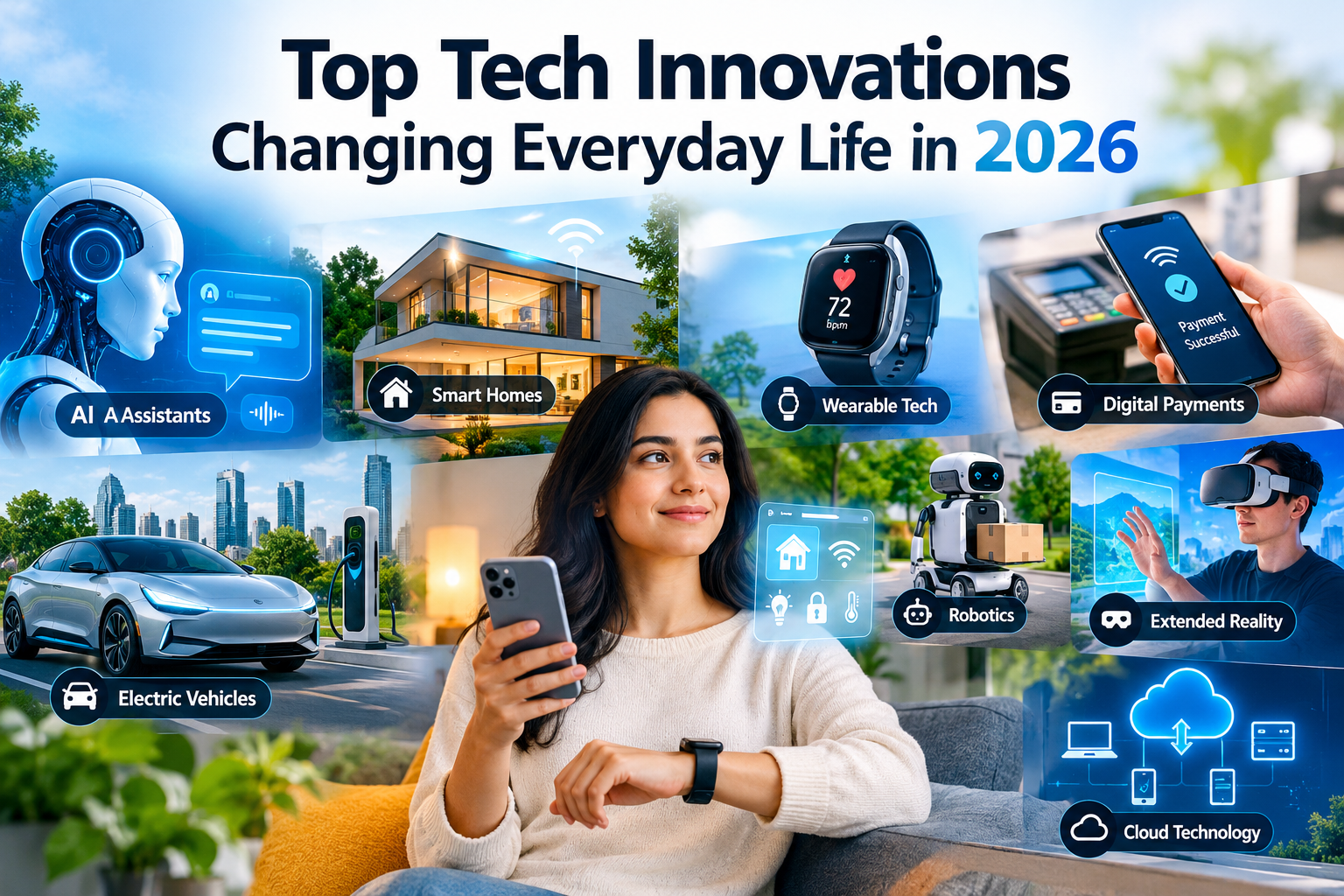
Technology continues to reshape daily routines in 2026, making communication, work, entertainment, shopping, and personal tasks faster and more convenient. New innovations are moving beyond laboratories and becoming practical tools for everyday users.
Artificial intelligence, smart devices, wearable technology, digital payments, and connected homes are changing how people interact with technology. These developments are creating simpler digital experiences while helping users save time, improve productivity, and stay connected.
Read More: Artificial Intelligence Trends Taking the Tech World by Storm
Artificial Intelligence Becomes More Personal
Artificial intelligence has become one of the most important technology innovations of 2026. AI assistants can understand natural language, provide useful information, organize tasks, summarize content, and support users across different digital platforms.
Modern AI tools are also becoming more personalized. They can adapt to individual preferences and help with writing, planning, research, customer support, and creative work. This makes AI increasingly useful for students, professionals, businesses, and everyday users.
Smart Homes Become More Intelligent
Smart home technology is becoming easier to use in 2026. Connected lights, security cameras, thermostats, appliances, and entertainment systems can communicate through a single digital ecosystem.
AI-powered automation allows smart devices to respond to routines and preferences. For example, lighting can adjust automatically, security systems can provide instant alerts, and smart appliances can operate according to scheduled activities.
Key smart home developments include:
- AI-powered home automation
- Smarter security and monitoring systems
- Connected appliances with remote controls
Wearable Technology Improves Daily Convenience
Wearable devices have moved beyond basic fitness tracking. Smartwatches, smart rings, and other wearable gadgets can provide notifications, activity information, communication features, and personalized insights.
The growing use of wearable technology is making digital information more accessible without requiring users to constantly check their smartphones. Smaller and more efficient devices are also improving comfort for everyday use.
Faster and Smarter Mobile Connectivity
Mobile connectivity continues to improve as networks become faster and more reliable. Advanced wireless technologies are supporting smoother video calls, cloud services, online gaming, streaming, and connected devices.
Better connectivity also supports the growth of smart cities and Internet of Things devices. More everyday products can communicate with online services, creating connected experiences across homes, workplaces, vehicles, and public spaces.
Digital Payments Transform Shopping
Digital payment technology is changing the way people purchase products and services. Mobile wallets, contactless payments, QR-based transactions, and online banking provide convenient alternatives to traditional cash payments.
Security improvements are also becoming an important part of digital finance. Biometric authentication, encryption, transaction monitoring, and additional verification methods help protect users during online and in-store payments.
Electric Vehicles Become More Practical
Electric vehicle technology is developing rapidly in 2026. Improvements in batteries, charging infrastructure, driving technology, and vehicle software are making electric transportation more practical for many users.
Modern electric vehicles increasingly include connected dashboards, smartphone integration, intelligent navigation, driver-assistance features, and software updates. These technologies are changing the driving experience while supporting the wider transition toward cleaner transportation.
Extended Reality Enters Everyday Experiences
Extended reality, including augmented reality and virtual reality, is becoming more useful outside gaming. AR features can add digital information to real-world environments, while VR can create immersive experiences for entertainment, education, training, and collaboration.
Businesses and educational institutions are exploring immersive technology for product demonstrations, virtual learning, professional training, and remote experiences. As hardware becomes more comfortable and capable, extended reality could become a more common part of everyday digital life.
AI-Powered Health and Fitness Technology
Technology is making personal fitness and wellness tracking more accessible. Wearable devices can collect information about activity, exercise, sleep patterns, and other measurements, giving users a clearer view of their daily routines.
AI can help organize this information into understandable insights. However, personal technology should complement professional medical advice rather than replace qualified healthcare services.
Popular applications include:
- Fitness and activity tracking
- Personalized exercise insights
- Sleep and routine monitoring
Smart Transportation Connects People and Places
Transportation technology is becoming increasingly connected. Navigation platforms can provide real-time traffic information, while connected vehicles can communicate with smartphones and other digital services.
AI-assisted driving features are also becoming more common in modern vehicles. These systems can support drivers with functions such as parking assistance, lane monitoring, collision warnings, and adaptive driving features.
Robotics Moves Into Everyday Tasks
Robotics is no longer limited to factories and research facilities. Robots are increasingly being developed for delivery services, warehouses, cleaning, agriculture, healthcare support, and other practical applications.
Advances in AI, sensors, computer vision, and machine learning are helping robots operate more effectively in changing environments. As these technologies mature, robotics could become increasingly visible in homes, workplaces, and public services.
Cloud Technology Makes Work More Flexible
Cloud computing continues to influence modern work and personal technology. Files, applications, communication platforms, and digital services can be accessed from multiple devices through internet-based systems.
This flexibility supports remote work, online education, collaboration, and digital businesses. Cloud-based tools also make it easier for teams to share information and work together without being in the same physical location.
Cybersecurity Becomes More Important
As more devices connect to the internet, cybersecurity has become an essential part of everyday technology. Consumers now manage sensitive information through smartphones, computers, payment platforms, smart homes, and online accounts.
Modern security technologies use stronger authentication, encryption, AI-based threat detection, and automated monitoring. Users can also improve their digital security by using unique passwords, multifactor authentication, software updates, and trusted applications.
The Future of Everyday Technology
The biggest technology innovations of 2026 are focused on making digital experiences more intelligent, connected, and convenient. AI, smart homes, wearables, electric vehicles, robotics, digital payments, and immersive technologies are gradually becoming part of normal daily routines.
The most important change is not simply the arrival of new gadgets. It is the way these technologies work together. Connected systems can reduce repetitive tasks, improve access to information, and create more personalized experiences. As innovation continues, everyday technology will likely become even more integrated into how people live, work, communicate, and make decisions.
Frequently Asked Questions
What are the top tech innovations in 2026?
AI assistants, smart homes, wearable devices, digital payments, electric vehicles, robotics, and extended reality are among the major innovations shaping daily life in 2026.
How is AI changing everyday life?
AI helps users manage tasks, find information, create content, automate routines, and receive personalized digital assistance.
Are smart homes becoming more common in 2026?
Yes, smart home systems are becoming more accessible, with connected appliances, security devices, lighting, and AI-powered automation.
How are wearable devices improving daily life?
Wearables provide activity tracking, notifications, fitness insights, sleep information, and convenient access to digital services.
What role do digital payments play in modern life?
Digital payments offer fast and convenient transactions through mobile wallets, contactless systems, QR payments, and online banking.
How is technology improving transportation?
Electric vehicles, connected navigation, driver-assistance systems, and intelligent transportation services are making travel more connected and efficient.
Why is cybersecurity important in 2026?
Growing digital connectivity increases security risks, making strong passwords, multifactor authentication, encryption, and software updates increasingly important.
Conclusion
Tech innovations are transforming everyday life in 2026 through smarter, faster, and more connected experiences. Artificial intelligence, smart homes, wearable devices, digital payments, electric vehicles, robotics, and advanced connectivity are making daily tasks easier and more efficient. As these technologies continue to evolve, their growing role in work, communication, transportation, entertainment, and personal routines will shape a more connected digital future.

1 Comment
Pingback: Top Tech Stories Everyone Is Talking About This Year