
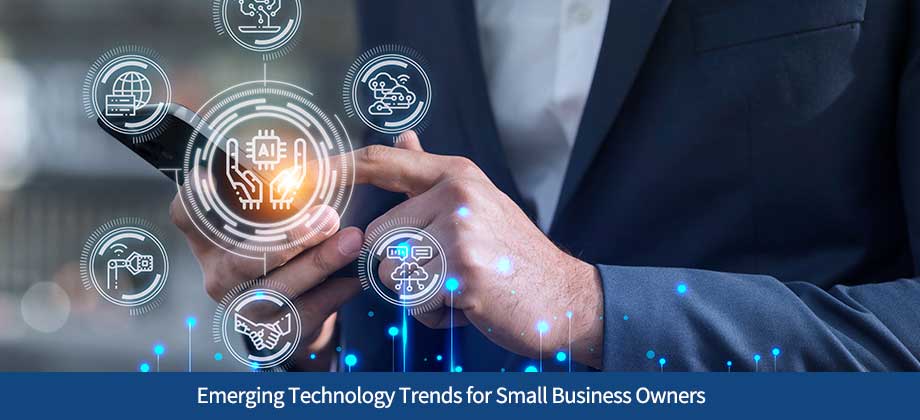
Technology is changing the business world at an extraordinary pace. New digital tools are helping companies improve productivity, understand customers, reduce costs, and compete in increasingly demanding markets. From artificial intelligence to advanced cybersecurity, emerging technologies are creating opportunities for businesses of almost every size and industry.
Companies that understand these technologies early can make smarter investment decisions and prepare for future changes. However, adopting every new technology is not the answer. Businesses need to identify solutions that match their goals, customer needs, workforce, and long-term strategy while maintaining security and responsible use.
Read More: The Biggest Technology Trends That Will Shape 2026
Artificial Intelligence and Generative AI
Artificial intelligence is one of the most important emerging technologies for modern businesses. AI can analyze large amounts of data, identify patterns, automate repetitive processes, and support decision-making. Businesses are already using AI for customer service, marketing, sales forecasting, fraud detection, and operational planning.
Generative AI takes these capabilities further by creating text, images, software code, summaries, and other digital content. Companies can use it to accelerate content creation, improve internal communication, assist employees, and develop new products. Businesses should focus on practical applications while maintaining human oversight and protecting sensitive information.
Internet of Things
The Internet of Things, commonly called IoT, connects physical devices to digital networks so they can collect and exchange information. Sensors in equipment, vehicles, buildings, and industrial systems can provide businesses with real-time operational data.
IoT technology can improve efficiency by helping companies monitor assets, track inventory, manage energy consumption, and predict equipment failures. In manufacturing, for example, connected machinery can provide early warnings about potential maintenance problems, reducing unexpected downtime and operational costs.
Cloud Computing
Cloud computing continues to transform how businesses store data, operate software, and manage IT infrastructure. Instead of relying entirely on physical servers, companies can access computing resources through flexible cloud platforms that can scale according to demand.
Cloud technology also supports remote work, collaboration, data backup, and business continuity. Small businesses can access sophisticated digital services without making large investments in physical infrastructure, while larger organizations can use cloud environments to develop and deploy applications more efficiently.
Important business advantages of cloud computing include:
- Flexible infrastructure that can scale with business demand
- Lower dependence on expensive physical hardware
- Easier collaboration between distributed teams
- Faster deployment of digital applications and services
Edge Computing
Edge computing brings data processing closer to the devices and locations where data is generated. Instead of sending every piece of information to a distant data center, some processing can happen locally on devices or nearby servers.
This approach can reduce latency and improve performance for applications that require rapid responses. Industries such as manufacturing, healthcare, transportation, and retail can benefit from edge computing when real-time data processing is essential for efficient operations and decision-making.
Extended Reality
Extended reality includes technologies such as virtual reality, augmented reality, and mixed reality. These technologies can create immersive or interactive digital experiences that have applications beyond entertainment.
Businesses can use extended reality for employee training, product demonstrations, remote assistance, design visualization, and customer experiences. For example, an organization could use augmented reality to provide technicians with digital instructions while they work on physical equipment, potentially improving efficiency and reducing errors.
Advanced Cybersecurity
As businesses adopt more connected technologies, cybersecurity becomes increasingly important. Emerging security technologies use artificial intelligence, behavioral analysis, automation, and advanced monitoring to identify suspicious activity and respond to threats.
Modern businesses should consider cybersecurity an essential part of technology strategy rather than an afterthought. Strong authentication, employee awareness, continuous monitoring, data protection, and regular security assessments can help organizations reduce their exposure to increasingly sophisticated digital attacks.
Businesses should prioritize areas such as:
- Identity and access management
- Continuous threat detection and monitoring
- Data encryption and privacy protection
- Employee cybersecurity education
Quantum Computing
Quantum computing is an emerging field with the potential to solve certain complex problems in ways that differ fundamentally from traditional computing. Although practical business applications are still developing, organizations in areas such as finance, pharmaceuticals, logistics, and materials science are watching the technology closely.
The potential of quantum computing includes advanced optimization, complex simulations, and specialized data analysis. Businesses do not necessarily need to invest heavily today, but companies operating in industries that could benefit from quantum capabilities should monitor developments and understand how the technology may affect their future strategies.
Sustainable Technology
Sustainability is becoming increasingly important for businesses, and emerging technology can support environmental goals. Smart energy systems, efficient data centers, electric transportation, renewable energy solutions, and intelligent resource management can help companies reduce waste and improve efficiency.
Artificial intelligence and IoT can also provide businesses with detailed information about energy consumption and resource use. By analyzing this information, organizations can identify inefficient processes and make better decisions about energy, materials, transportation, and infrastructure.
The Importance of Technology Strategy
Adopting emerging technology simply because it is popular can create unnecessary costs and complexity. Businesses should first identify specific problems or opportunities and then determine whether a new technology can provide measurable value. A clear strategy helps organizations avoid investments that do not support their broader objectives.
Companies should also consider employee skills, integration requirements, cybersecurity, scalability, and potential return on investment. Starting with smaller pilot projects can allow businesses to test new technologies, measure results, and identify challenges before committing significant resources.
Preparing for the Future
The business technology landscape will continue to evolve as different technologies become increasingly interconnected. AI may work alongside IoT devices, edge computing may support real-time analytics, and advanced cybersecurity may protect increasingly automated digital environments.
Businesses that remain informed and adaptable will be better positioned to respond to technological change. The goal should not be to adopt every emerging innovation but to understand which technologies can create genuine value, improve customer experiences, strengthen operations, and support sustainable long-term growth.
Conclusion
Emerging technologies are creating new possibilities for businesses across almost every industry. Artificial intelligence, cloud computing, IoT, robotics, 5G, cybersecurity, extended reality, blockchain, and other innovations can help companies improve efficiency and develop new competitive advantages.
The most successful businesses will approach technology adoption strategically. By monitoring important trends, testing promising solutions, investing in people, and prioritizing security, organizations can take advantage of innovation while reducing unnecessary risks. Staying prepared today can help businesses remain competitive as technology continues to reshape the future of work and commerce.

1 Comment
Pingback: Latest Technology Trends Making Headlines in 2026