
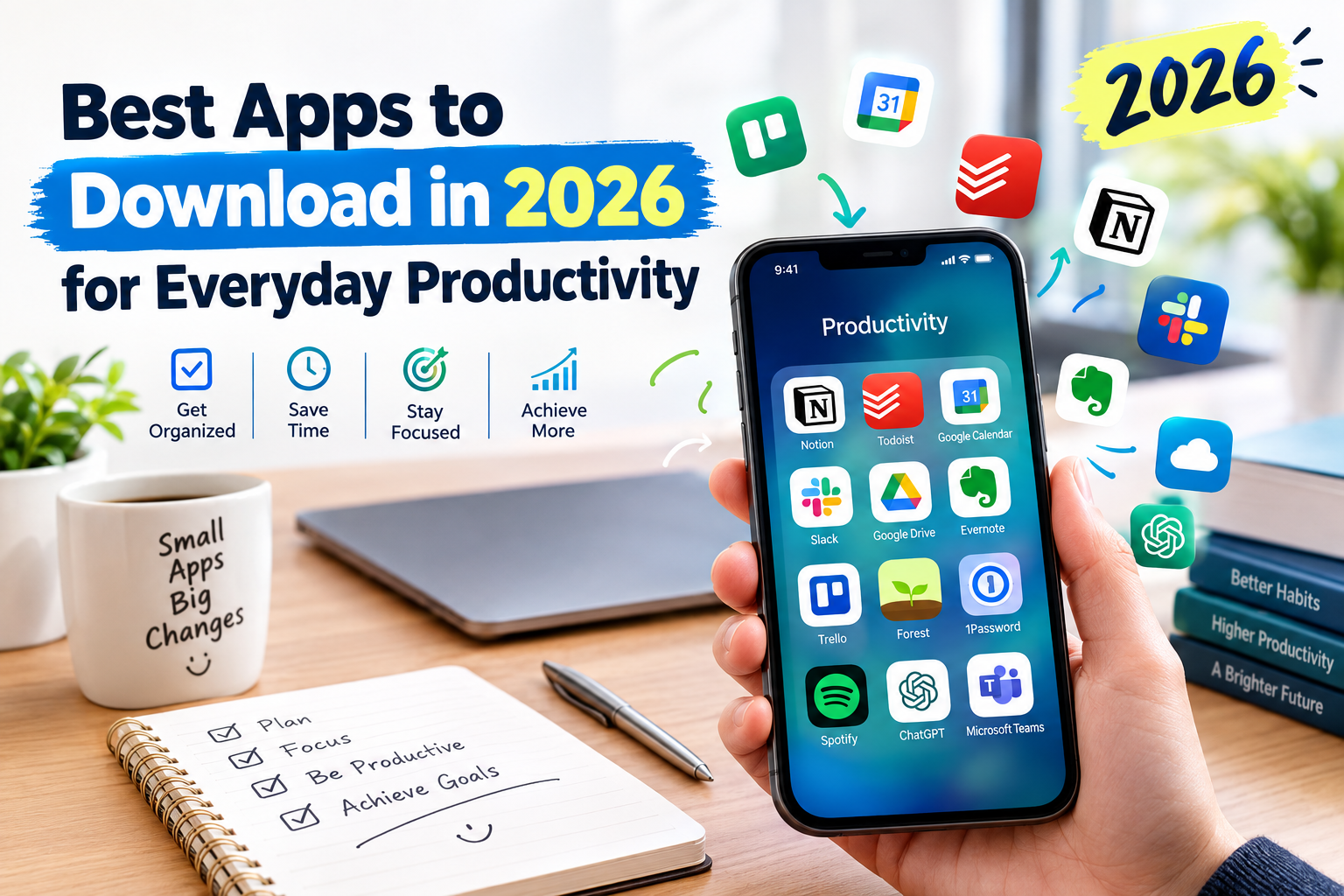
Everyday tasks can quickly become difficult when work, communication, planning, and personal responsibilities compete for attention. The right productivity apps can simplify these activities by keeping important information organized and making daily routines easier to manage.
In 2026, productivity apps are becoming smarter, faster, and more connected. From task management and note-taking to communication and time tracking, modern apps help users save time and stay focused. Choosing the right tools can create a more organized digital routine without adding unnecessary complexity.
Read More: Best Upcoming Games to Watch in 2026
Productivity Apps for Better Task Management
Task management apps remain essential for people who need to organize busy schedules. These apps allow users to create tasks, set deadlines, arrange priorities, and track progress from one place. A well-organized task list can make large projects feel more manageable.
Many modern productivity platforms also support reminders, recurring tasks, calendars, and collaboration. These features are useful for professionals, students, freelancers, and business owners who manage multiple responsibilities throughout the day.
Note-Taking Apps for Organizing Ideas
Digital note-taking apps provide a convenient way to save information, ideas, meeting notes, and important reminders. Instead of searching through notebooks or scattered documents, users can keep their information organized in one digital workspace.
Advanced note-taking tools now offer features such as search, synchronization, document organization, voice notes, and AI-assisted features. These capabilities make it easier to capture information quickly and access it across different devices.
Calendar Apps for Managing Daily Schedules
A reliable calendar app can improve time management by giving users a clear view of appointments, meetings, deadlines, and personal activities. Digital calendars also make it easier to plan tasks around important commitments.
Modern calendar apps can connect with other productivity tools, allowing users to manage schedules and tasks together. Notifications and reminders can also reduce the chances of missing important events or deadlines.
Communication Apps for Faster Collaboration
Communication plays an important role in modern productivity. Messaging and collaboration apps help teams exchange information, share files, organize discussions, and coordinate projects without relying on lengthy email conversations.
Many workplace communication platforms include video meetings, group chats, file sharing, and project-related channels. These features can help remote and hybrid teams maintain efficient communication while reducing unnecessary delays.
Cloud Storage Apps for Easy File Access
Cloud storage apps make important files available across smartphones, tablets, and computers. Users can store documents, images, presentations, spreadsheets, and other files without depending entirely on local storage.
Automatic synchronization is another useful feature. When files are updated on one device, changes can become available across connected devices. This makes cloud storage particularly useful for professionals who frequently switch between work environments.
Time Management Apps for Staying Focused
Managing time effectively is often more difficult than creating a simple task list. Time management apps can help users understand how they spend their working hours and identify activities that consume unnecessary time.
Focus timers, productivity tracking, and work-session features encourage users to dedicate specific periods to important tasks. These tools can be especially useful for freelancers, students, writers, developers, and remote workers.
AI Productivity Apps in 2026
Artificial intelligence has become an important part of productivity software in 2026. AI-powered apps can assist with writing, summarizing information, organizing content, generating ideas, and handling repetitive digital tasks.
AI features can also reduce the time required for routine work. Instead of replacing human decision-making, these tools can support users by handling smaller tasks and providing useful starting points for more complex projects.
Password Manager Apps for Digital Security
Productivity is closely connected with digital security. Password manager apps allow users to store login credentials securely while reducing the need to remember multiple passwords.
Many password managers also provide password generation, autofill, synchronization, and security alerts. Using one trusted password manager can make account management more convenient while supporting better online security practices.
Finance Apps for Managing Personal Expenses
Personal finance apps can help users monitor spending, organize budgets, track subscriptions, and understand their financial habits. Having financial information organized in one place can make everyday money management more convenient.
Some finance apps provide spending categories, budget alerts, and financial summaries. These features can help users maintain better awareness of regular expenses and avoid unnecessary spending.
Productivity Apps for Students
Students can benefit from productivity apps designed around planning, studying, note-taking, and time management. Digital planners can help organize assignments, exams, projects, and study sessions.
Note-taking and cloud storage tools also make educational resources easier to access. Students can keep lecture notes, research materials, documents, and study plans organized across multiple devices.
Productivity Apps for Remote Workers
Remote workers often need several digital tools to maintain an efficient workflow. Project management, communication, video conferencing, cloud storage, and time tracking apps can work together to support distributed teams.
The most useful setup depends on individual responsibilities. A writer may need strong note-taking and research tools, while a project manager may prioritize task tracking, communication, and team collaboration.
Choosing the Right Productivity Apps
The number of productivity apps available in 2026 can make choosing the right tools challenging. Installing too many apps may create more digital clutter instead of improving efficiency.
Consider the main problems that need to be solved before selecting an app. Users should look at features, ease of use, compatibility, privacy, pricing, and integration with existing tools.
A practical productivity setup may include:
- A task manager for daily responsibilities and deadlines.
- A calendar for appointments, meetings, and important events.
- A note-taking or cloud storage app for information and documents.
- A communication or collaboration platform for teamwork.
Frequently Asked Questions
What are the best productivity apps to download in 2026?
The best productivity apps include task managers, calendar tools, note-taking apps, cloud storage platforms, communication tools, and AI-powered productivity apps.
How do productivity apps improve daily work?
Productivity apps help organize tasks, manage schedules, set reminders, track progress, and reduce time spent on repetitive activities.
Are AI productivity apps useful in 2026?
Yes. AI productivity apps can assist with writing, summarizing information, organizing content, generating ideas, and completing routine digital tasks.
Which apps are useful for time management?
Calendar apps, task managers, focus timers, and time-tracking tools can help users plan their schedules and manage working hours more effectively.
Are productivity apps useful for students?
Yes. Students can use productivity apps to organize assignments, manage study schedules, take notes, store educational files, and track important deadlines.
Can productivity apps help remote workers?
Productivity apps can support remote workers through task management, team communication, video meetings, cloud storage, file sharing, and project coordination.
How should I choose the right productivity app?
Choose an app based on your specific needs, ease of use, features, device compatibility, privacy options, pricing, and integration with the tools you already use.
Conclusion
The best apps to download in 2026 are those that solve real everyday problems without making digital routines unnecessarily complicated. Task managers, calendars, note-taking tools, cloud storage platforms, communication apps, and AI productivity tools can all contribute to a more organized workflow.
Productivity does not come from using the largest number of applications. It comes from choosing reliable tools that match personal needs and using them consistently. With the right combination of apps, users can organize responsibilities, save time, improve focus, and manage everyday activities more efficiently.

1 Comment
Pingback: Top Education Technology Trends Shaping 2026