

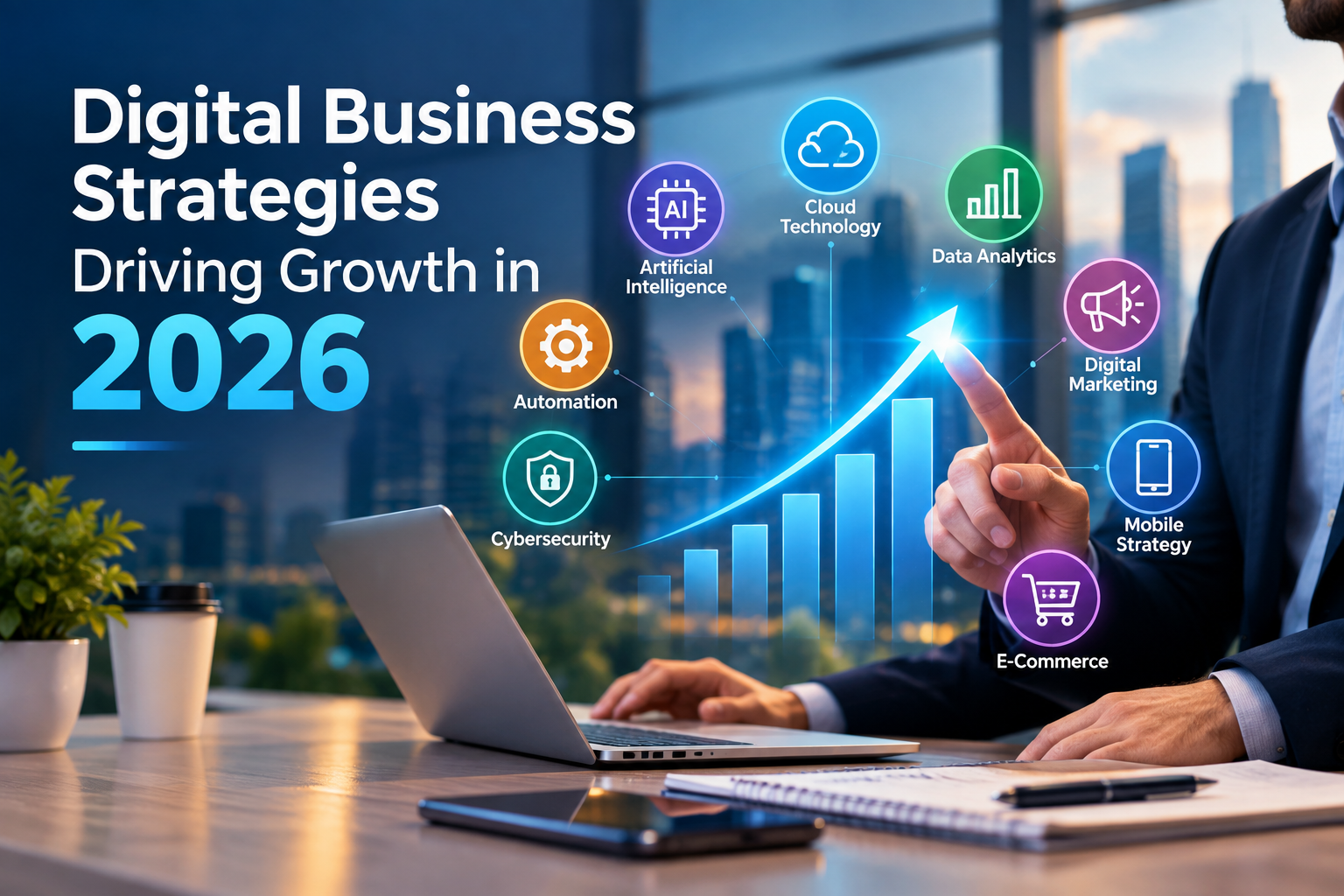
Digital transformation continues reshaping modern businesses in 2026. Companies across industries are adopting smarter technologies, stronger digital marketing methods, automation, and data-driven strategies to reach customers and improve operations. Businesses that embrace digital innovation can respond faster to market changes and create better customer experiences.
From artificial intelligence and cloud platforms to personalized marketing and cybersecurity, digital business strategies are becoming essential for sustainable growth. Organizations are focusing on practical technology solutions that reduce costs, improve productivity, strengthen customer relationships, and create new revenue opportunities.
Read More: Best Free Apps Making Everyday Tasks Easier
Artificial Intelligence for Business Growth
Artificial intelligence has become a major part of digital business strategies in 2026. Companies are using AI-powered tools to analyze information, automate repetitive tasks, support customer service, and improve business decisions. These applications help teams save time while focusing on higher-value activities.
AI also supports personalized customer experiences. Businesses can analyze customer behavior and preferences to provide relevant recommendations, targeted content, and faster support. This approach can improve engagement and help companies build stronger long-term relationships.
Data-Driven Decision Making
Data has become one of the most valuable resources for modern businesses. Companies collect information from websites, social platforms, customer interactions, sales systems, and digital campaigns. Analyzing this information helps businesses identify trends and understand changing customer needs.
Modern analytics platforms allow teams to monitor performance in real time. Businesses can use these insights to adjust marketing campaigns, improve products, manage resources, and identify new opportunities. Data-driven decisions can reduce guesswork and support more effective business planning.
Personalized Digital Marketing
Digital marketing is becoming more personalized in 2026. Customers expect brands to understand their interests and provide useful information instead of generic promotional messages. Businesses are using customer data and automation tools to create more relevant marketing experiences.
Personalized strategies can include targeted email campaigns, customized website experiences, social media content, and product recommendations. When businesses deliver relevant content at the right stage of the customer journey, they can improve engagement and strengthen brand loyalty.
Cloud Technology and Flexible Operations
Cloud technology continues supporting business growth by providing flexible access to applications, data, and digital infrastructure. Businesses can use cloud-based platforms without maintaining large physical technology systems.
Cloud solutions also support remote and hybrid teams. Employees can collaborate through shared platforms, access important files, and communicate from different locations. This flexibility allows companies to build efficient workflows while adapting to changing workplace requirements.
Automation and Operational Efficiency
Business automation is another important growth strategy in 2026. Companies are automating repetitive processes such as data entry, scheduling, customer communications, reporting, and inventory management.
Automation can reduce manual workloads and minimize common errors. Employees can spend more time on creative thinking, customer relationships, strategic planning, and other activities that require human judgment.
Key areas benefiting from automation include:
- Customer service and communication
- Marketing and sales processes
- Finance and administrative tasks
Stronger Customer Experience
Customer experience has become a major competitive factor for digital businesses. Customers want fast responses, simple purchasing processes, personalized communication, and convenient digital services.
Businesses are improving customer experiences through mobile-friendly websites, AI-powered support, personalized recommendations, and seamless online payment systems. A consistent digital experience can encourage customers to return and recommend a brand to others.
Social Media and Content Strategy
Social media remains an important channel for building brand awareness and connecting with customers. Businesses are focusing on useful, authentic, and engaging content rather than relying only on promotional posts.
Short-form videos, educational content, expert insights, customer stories, and interactive posts can help brands build stronger online communities. Consistent content also gives businesses more opportunities to reach potential customers through organic and paid channels.
Cybersecurity as a Growth Priority
Digital growth also requires strong cybersecurity. As companies store more information online and rely on connected systems, protecting customer and business data has become increasingly important.
Businesses are strengthening security through multi-factor authentication, employee training, regular software updates, secure cloud systems, and continuous monitoring. Strong cybersecurity can protect valuable information while maintaining customer trust.
Mobile-First Business Strategies
Mobile devices continue influencing how customers discover brands, compare products, make purchases, and communicate with companies. Businesses are therefore prioritizing mobile-friendly websites, applications, payment systems, and digital services.
A mobile-first strategy can improve accessibility and create smoother customer journeys. Companies that optimize digital experiences for smaller screens can make it easier for customers to interact with their products and services.
Digital Payments and Online Commerce
Digital payment technology is supporting faster and more convenient transactions. Businesses are offering multiple payment options to meet customer expectations and simplify online purchases.
E-commerce platforms are also becoming more sophisticated, combining personalized recommendations, automated marketing, secure payments, and efficient delivery systems. These developments are helping businesses reach customers beyond traditional geographic markets.
Building a Digital-Ready Workforce
Technology alone cannot guarantee business growth. Employees need the skills required to use new digital tools effectively. Companies are investing in training programs covering AI, analytics, cybersecurity, digital marketing, automation, and cloud technology.
A digitally skilled workforce can adapt more easily to changing technologies. Continuous learning also encourages innovation and helps businesses make better use of their technology investments.
Sustainable Digital Growth
Businesses are increasingly considering sustainability when developing digital strategies. Efficient cloud infrastructure, digital documentation, remote collaboration, and automated processes can help organizations reduce unnecessary resource consumption.
Sustainable digital practices can also strengthen brand reputation. Customers and business partners are paying greater attention to how organizations manage environmental and social responsibilities.
Frequently Asked Questions
What are digital business strategies in 2026?
Digital business strategies use technologies such as AI, automation, cloud computing, analytics, and digital marketing to improve business growth and efficiency.
How does AI help businesses grow?
AI helps businesses automate tasks, analyze data, personalize customer experiences, improve decision-making, and deliver faster customer support.
Why is data important for digital business growth?
Data helps businesses understand customer behavior, identify market trends, measure performance, and make informed strategic decisions.
How does automation improve business operations?
Automation reduces repetitive manual work, minimizes errors, saves time, and allows employees to focus on more valuable business activities.
Why is cybersecurity important for digital businesses?
Cybersecurity protects business systems, customer information, financial data, and digital operations from unauthorized access and online threats.
How can businesses improve their digital customer experience?
Businesses can improve customer experience through mobile-friendly websites, personalized content, fast support, simple payment options, and seamless online services.
What role does cloud technology play in business growth?
Cloud technology provides flexible access to applications and data, supports remote collaboration, reduces infrastructure requirements, and helps businesses scale digital operations.
Conclusion
Digital business strategies are playing a central role in growth throughout 2026. Artificial intelligence, automation, cloud technology, personalized marketing, data analytics, cybersecurity, and mobile experiences are helping businesses operate more efficiently and connect with customers.
Successful digital transformation requires more than adopting the latest technology. Businesses need clear goals, skilled employees, reliable data, strong security, and customer-focused strategies. Companies that combine technology with practical business planning can create stronger foundations for long-term digital growth.
