

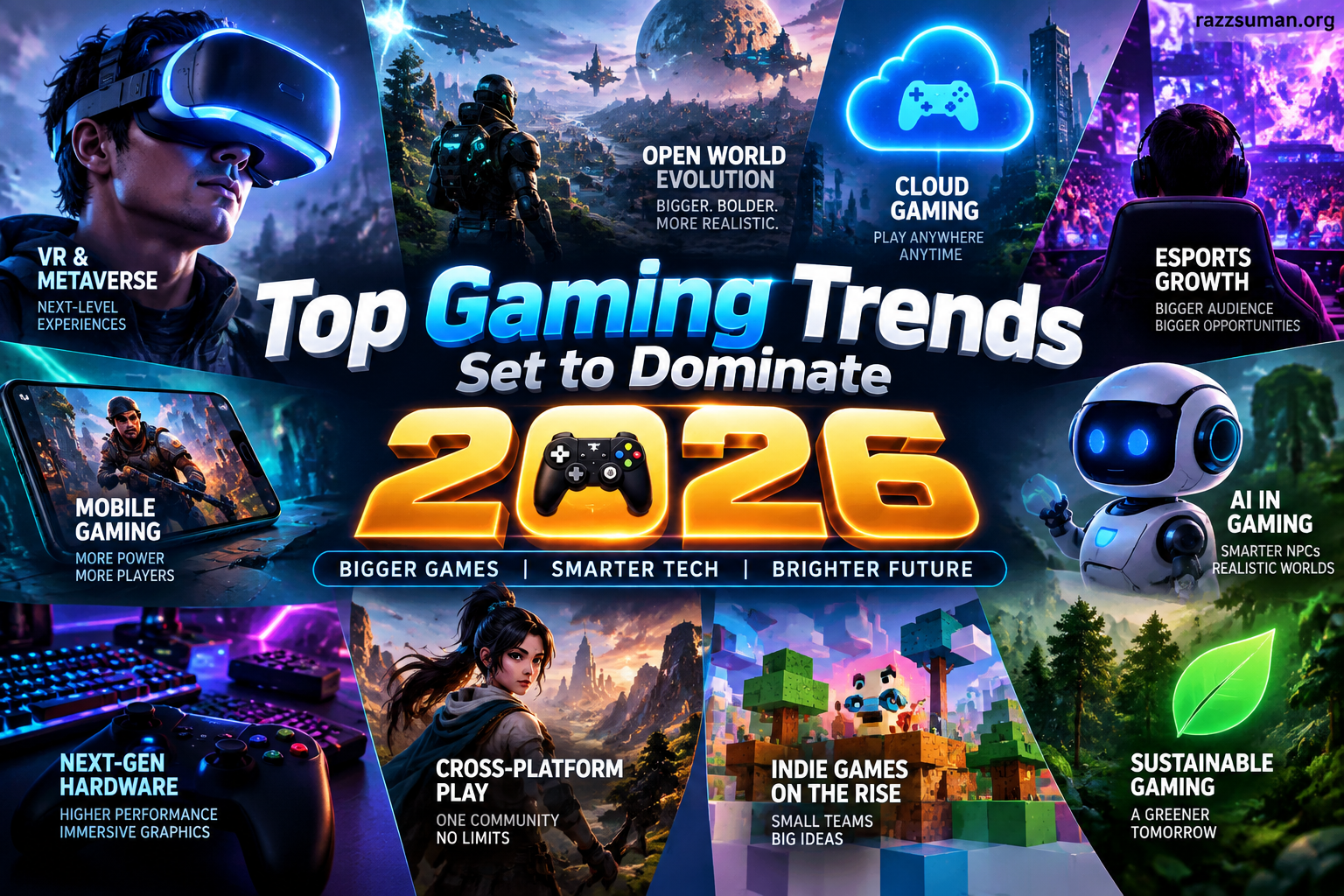
Gaming continues to evolve at a rapid pace, driven by new technology, changing player expectations, and innovative game development. In 2026, the gaming industry is expected to deliver more immersive experiences through artificial intelligence, cloud platforms, advanced graphics, and connected communities.
From smarter game worlds to faster cloud gaming services, new trends are changing how players discover, play, and enjoy games. These developments are creating fresh opportunities for developers while giving gamers more flexible and personalized experiences across consoles, PCs, smartphones, and other devices.
Read More: 10 Must-Have Android Apps Worth Trying in 2026
Artificial Intelligence Transforming Game Development
Artificial intelligence is becoming an important part of modern game development. Developers can use AI tools to create smarter characters, dynamic environments, realistic conversations, and more responsive gameplay. These systems can help make virtual worlds feel less predictable and more engaging.
AI can also support developers during the production process. Automated tools can assist with testing, animation, dialogue creation, and content development. As these technologies improve, studios may create larger and more detailed game worlds while reducing development time.
Cloud Gaming Expanding Access
Cloud gaming is becoming increasingly attractive because it allows players to access demanding games without relying entirely on powerful local hardware. Games can run on remote servers while players stream gameplay through compatible devices and internet connections.
Improved network infrastructure is helping cloud gaming become smoother and more accessible. Players can potentially move between different devices while maintaining access to their games, creating greater flexibility for modern gaming audiences.
Virtual Reality Creating Deeper Experiences
Virtual reality remains one of the most exciting areas within gaming. Better headsets, improved motion tracking, sharper displays, and more realistic environments are helping developers create deeper interactive experiences.
VR games are also expanding beyond traditional entertainment. Training, education, fitness, simulation, and social experiences are becoming important areas for immersive technology. As hardware becomes more comfortable and accessible, VR gaming could attract a wider audience.
Mobile Gaming Becoming More Advanced
Mobile gaming continues to represent a major part of the global gaming market. Modern smartphones offer powerful processors, high-quality displays, faster connectivity, and improved graphics capabilities, allowing developers to create more sophisticated games.
Cross-platform features are also improving mobile gaming. Players can increasingly connect with friends using different devices, while cloud technology and improved controllers are helping smartphones deliver experiences closer to traditional gaming platforms.
Cross-Platform Gaming Growing Further
Cross-platform gaming allows players using different devices to participate in the same gaming experience. This trend is helping create larger communities by removing some of the barriers between PC, console, and mobile players.
Developers are also focusing on shared progression and account systems. Players can access their achievements, purchases, and progress across supported platforms, making gaming more convenient and connected.
Next-Generation Graphics and Realism
Visual quality remains a major focus for game developers in 2026. Advanced rendering technologies, improved lighting, realistic textures, and powerful hardware are helping games achieve increasingly detailed environments.
Real-time lighting and advanced graphical techniques can make virtual worlds appear more natural. These improvements are especially noticeable in open-world games, racing titles, action games, and cinematic experiences where visual immersion plays an important role.
Social Gaming Communities
Gaming is becoming more social as players look for meaningful ways to communicate, compete, and collaborate. Multiplayer games now often function as online communities where people can interact beyond traditional matches.
Voice communication, live events, digital spaces, and community features are helping games become long-term social platforms. Developers are placing greater attention on tools that encourage positive interaction and stronger player communities.
Esports Continuing Its Global Growth
Esports remains an important part of the gaming industry. Competitive gaming attracts professional players, dedicated audiences, sponsors, streaming platforms, and major tournament organizers.
Improved broadcasting technology is making esports events more engaging for viewers. Online tournaments and regional competitions are also creating additional opportunities for emerging players to participate in competitive gaming.
Personalized Gaming Experiences
Personalization is becoming another major gaming trend. Games can use player behavior and preferences to deliver customized challenges, recommendations, rewards, and experiences.
AI-powered systems may make personalization even more advanced. Instead of providing identical experiences for every player, future games could adjust difficulty, content, and interactions based on individual playing styles.
Faster and Smarter Game Engines
Modern game engines are becoming more powerful and efficient. Developers can create detailed environments, advanced physics, realistic characters, and large interactive worlds using increasingly sophisticated development tools.
These improvements can also make game production more flexible. Better workflows and automated features allow development teams to experiment with new ideas while managing complex projects more efficiently.
What Gaming Could Look Like in 2026
The gaming landscape is becoming more connected, immersive, and technology-driven. AI, cloud gaming, VR, mobile platforms, cross-platform play, and advanced graphics are working together to reshape the player experience.
Some important developments include:
- AI-powered characters and personalized gameplay
- Cloud-based gaming and cross-device access
- Advanced VR, graphics, and immersive experiences
Players can expect gaming platforms to become increasingly interconnected. Instead of focusing only on hardware, the industry is moving toward flexible ecosystems where games, communities, services, and digital experiences work together.
Frequently Asked Questions
What are the biggest gaming trends in 2026?
AI gaming, cloud gaming, virtual reality, mobile gaming, cross-platform play, and advanced graphics are major trends in 2026.
How is AI changing gaming in 2026?
AI is helping create smarter characters, dynamic environments, personalized gameplay, and more efficient game development.
Is cloud gaming becoming more popular in 2026?
Yes. Better internet infrastructure and cloud technology are making game streaming more accessible across different devices.
Will VR gaming grow in 2026?
VR gaming is expected to continue developing through improved headsets, tracking systems, graphics, and immersive experiences.
Why is mobile gaming important in 2026?
Modern smartphones offer powerful hardware, high-quality displays, and faster connectivity, supporting increasingly advanced gaming experiences.
What is cross-platform gaming?
Cross-platform gaming allows players using different devices, such as PC, consoles, and mobile, to play together.
How will gaming graphics improve in 2026?
Advanced rendering, realistic lighting, detailed textures, and improved hardware are helping create more visually immersive game worlds.
Conclusion
Gaming in 2026 is moving toward smarter, faster, and more immersive experiences. AI, cloud gaming, virtual reality, mobile platforms, cross-platform play, and advanced graphics are reshaping how players enjoy games.
As technology continues to evolve, developers are creating richer worlds and more personalized experiences. These gaming trends will continue influencing the industry, bringing new possibilities for players, creators, and gaming communities.

1 Comment
Pingback: AI Business Trends Transforming Modern Companies