

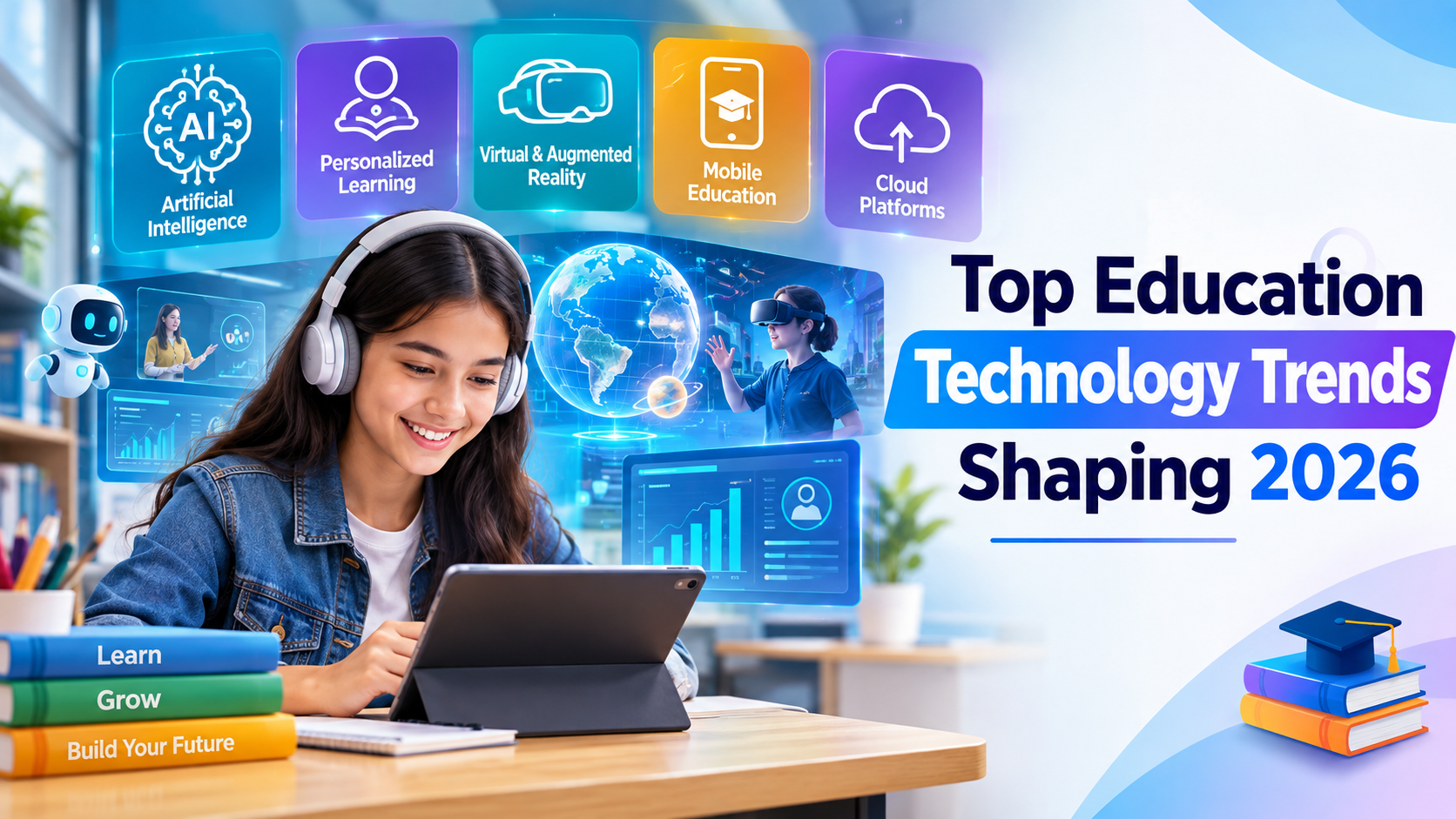
Education technology continues transforming classrooms, online learning, professional training, and student experiences. In 2026, schools and educational institutions are adopting smarter digital tools to improve learning quality, accessibility, engagement, and academic performance. Emerging technologies are creating more flexible learning environments while helping educators understand individual student needs.
From artificial intelligence and personalized learning to immersive classrooms and advanced learning platforms, technology is changing traditional education models. These developments are making education more interactive, data-driven, and accessible. Understanding the top education technology trends shaping 2026 can help teachers, students, institutions, and education professionals prepare for the future.
Read More: Best Apps to Download in 2026 for Everyday Productivity
Artificial Intelligence in Education
Artificial intelligence has become one of the most influential technologies in modern education. AI-powered platforms can analyze student performance, identify learning gaps, generate educational content, and provide personalized recommendations. Teachers can also use AI tools to create lesson materials, quizzes, summaries, and classroom activities.
AI tutoring systems are gaining attention because they can provide instant support outside traditional classroom hours. Students can receive explanations based on their learning levels and practice difficult concepts at their own pace. Responsible AI use remains important, especially regarding accuracy, privacy, academic integrity, and responsible student data management.
Personalized Learning Experiences
Personalized learning is becoming increasingly important as students have different abilities, interests, and learning speeds. Modern educational platforms use data analytics and intelligent algorithms to adjust learning materials according to individual progress.
Adaptive learning systems can recommend specific exercises when students struggle with particular concepts. Advanced platforms can also modify difficulty levels and learning paths automatically. This approach allows students to focus on areas requiring additional practice while progressing faster through familiar topics.
Virtual and Augmented Reality Classrooms
Virtual reality and augmented reality are creating more immersive educational experiences in 2026. Students can explore historical locations, scientific environments, geographical locations, and complex technical concepts through interactive digital experiences.
VR can support subjects requiring practical visualization, while AR can add digital information to physical learning environments. These technologies can make difficult topics easier to understand by allowing students to experience concepts rather than relying entirely on textbooks or traditional lectures.
Smart Learning Management Systems
Learning management systems are becoming more intelligent and feature-rich. Modern LMS platforms combine course management, assessments, communication, analytics, and automated learning recommendations within a single environment.
Smart LMS technology can help educators monitor attendance, assignment completion, assessment results, and student engagement. Institutions can use these insights to identify students who may require additional academic support and improve course planning.
Gamification in Education
Gamification continues gaining popularity as educators search for engaging ways to motivate learners. Educational platforms increasingly use points, challenges, badges, progress levels, leaderboards, and interactive activities to make learning more engaging.
Gamified learning can encourage students to participate regularly and complete educational activities. When designed around meaningful learning objectives, game-based features can support motivation without replacing strong teaching methods.
AI-Powered Educational Content
Content creation is becoming faster through AI-powered educational tools. Teachers and course creators can generate practice questions, lesson outlines, study materials, presentations, and personalized exercises with digital assistance.
AI-generated content can reduce repetitive preparation work and give educators more time for teaching and student interaction. Human review remains essential because educational content needs accuracy, appropriate context, clear explanations, and alignment with curriculum requirements.
Microlearning and Mobile Education
Microlearning is becoming a practical approach for students and professionals with limited study time. Instead of lengthy lessons, learners can access short videos, quizzes, explanations, and interactive activities focused on specific concepts.
Mobile learning platforms make these resources available across smartphones and tablets. Students can study during short periods throughout the day, making education more flexible. Microlearning also supports professional development because employees can complete focused training without interrupting their regular schedules.
Cloud-Based Education Platforms
Cloud technology continues supporting digital education by providing flexible access to learning resources. Students and teachers can access assignments, documents, lectures, assessments, and educational applications from different devices.
Cloud-based platforms also simplify collaboration between students, teachers, and institutions. Shared digital workspaces allow learners to work on projects, exchange feedback, and manage academic materials without depending on a single physical location.
Data Analytics for Student Performance
Education data analytics is becoming an important part of academic decision-making. Institutions can collect information about student participation, assessment results, course progress, and learning behavior.
Educators can use these insights to identify patterns and provide targeted support. Data-driven education can help institutions improve curriculum design and understand which learning resources produce stronger engagement. Privacy protection and responsible data handling remain essential as educational data becomes increasingly valuable.
Cybersecurity and Student Data Protection
The growth of digital education also increases the importance of cybersecurity. Schools, universities, and online learning platforms manage sensitive information involving students, teachers, academic records, and institutional systems.
In 2026, educational organizations are placing greater emphasis on secure authentication, data encryption, access controls, and cybersecurity awareness. Protecting digital learning environments helps maintain trust and reduces risks associated with unauthorized access and data breaches.
Future of Education Technology
Education technology in 2026 is moving toward more personalized, immersive, intelligent, and flexible learning experiences. AI, adaptive platforms, virtual environments, mobile learning, analytics, and cloud technology are influencing how educational content is delivered and consumed.
The future of education will depend not only on adopting new technology but also on using it responsibly. Technology works best when it supports teachers, encourages student participation, protects personal information, and improves genuine learning outcomes. As these trends continue developing, educational institutions can create learning environments that are more accessible, engaging, and prepared for changing academic and professional needs.
Frequently Asked Questions
What are the top education technology trends shaping 2026?
Major trends include artificial intelligence, personalized learning, virtual and augmented reality, smart learning management systems, gamification, mobile learning, and education data analytics.
How is AI changing education in 2026?
AI supports personalized learning, automated content creation, intelligent tutoring, student performance analysis, and administrative tasks, helping educators deliver more efficient learning experiences.
What is personalized learning technology?
Personalized learning technology uses student performance and learning behavior to adjust educational content, activities, and difficulty levels according to individual learning needs.
How are VR and AR being used in education?
Virtual and augmented reality create immersive learning experiences that allow students to explore subjects such as science, history, geography, and technical training through interactive digital environments.
Why is gamification important in education?
Gamification introduces elements such as challenges, badges, points, and progress levels into learning activities. These features can increase engagement and encourage students to participate consistently.
What role does data analytics play in education?
Education data analytics helps teachers and institutions understand student performance, identify learning gaps, monitor engagement, and make informed decisions about academic support and course design.
What is the future of education technology?
The future is moving toward intelligent, personalized, immersive, mobile, and data-driven learning. AI and emerging digital technologies will continue supporting teachers while creating more flexible learning opportunities for students.
Conclusion
Education technology is reshaping learning through artificial intelligence, personalized platforms, immersive tools, mobile education, and data analytics. These innovations are making education more flexible, engaging, and accessible for students and educators.
As technology continues evolving throughout 2026, responsible adoption will remain essential. Combining modern digital tools with effective teaching practices can create smarter learning environments while supporting better educational experiences and long-term academic growth.

1 Comment
Pingback: Best AI Tools for Students in 2026